

Hardwood Floor Repair And Restoration
KITSAP WOOD FLOORING
Hardwood Floor Repair and Restoration in Kitsap County
Hardwood floors add warmth, character, and lasting value to your home, but water damage, pet stains, scratches, and worn finishes can take their toll. Our hardwood floor repair and restoration services help revive damaged boards and aging floors, preserving their natural beauty while helping you avoid unnecessary replacement.


Repair or Restore? What Your Floor Needs
Hardwood floor repair and refinishing services can address localized damage or give an entire worn floor a fresh start. The right solution depends on the condition of the wood, the extent of the damage, and the finish that remains.
Repair focuses on specific problems, such as water stains, pet stains, loose boards, deep scratches, or damaged sections that need patching or replacement. It can help preserve the surrounding flooring while addressing the areas that need attention.
Restoration takes a broader approach. It may involve repairing individual boards, sanding the existing surface, blending repairs, and applying a new protective finish to refresh the appearance of the floor.
For homeowners considering hardwood floor repair in Kitsap County, a professional assessment helps determine whether a targeted repair, a full restoration, or new flooring makes the most sense. The goal is to preserve usable wood wherever practical and avoid unnecessary replacement.
Hardwood Floor Repairs We Handle
Hardwood can develop problems over time, especially in busy homes exposed to seasonal moisture, everyday traffic, pets, and spills. Identifying the cause is an important first step toward choosing the right repair.
Water Damage
Spills, plumbing leaks, and tracked-in moisture can leave water stains, discoloration, or warped boards. In the Pacific Northwest, moisture deserves particular attention because damp conditions can affect wood and the subfloor beneath it. Water-damaged hardwood floor repair starts with identifying the source and assessing the damage. Depending on the findings, repairs may involve drying, replacing affected boards, or restoring the surface after the moisture issue has been addressed.
Pet Stains and Scratches
Pets can leave scratches, worn patches, and dark stains that ordinary cleaning cannot remove. Surface scratches may improve with refinishing, while deeper pet stains can penetrate the wood itself. The appropriate solution depends on how far the damage extends. Targeted repairs, sanding, and refinishing may improve the appearance, although deeply embedded stains may remain visible or require board replacement.
Hardwood Floor Board Replacement
Cracked, split, severely stained, or badly warped boards may need replacement rather than surface treatment. Hardwood floor board replacement involves removing damaged sections and selecting replacement wood with a compatible species, grain, width, and thickness. Matching the existing floor can take careful work, especially in older homes where the original materials may be difficult to source. Once installed, the repaired area may need sanding and finishing to blend with the surrounding boards.
Gaps, Cupping and Loose Boards
Seasonal humidity changes and moisture problems can contribute to gaps, cupping, crowning, or loose boards. Cupping occurs when board edges rise above the center; crowning is the opposite, with the center sitting higher than the edges. These symptoms should be assessed before sanding because the underlying moisture or subfloor issue may still be present. Once the cause is understood and addressed, suitable repairs can help improve stability and appearance.
When surface damage extends across a larger area, hardwood floor refinishing may be the next step. A new finish can refresh the appearance of sound wood after suitable preparation, but it cannot correct every structural or moisture-related problem.
Restoring Older Hardwood Floors

Older hardwood floors often have something new flooring cannot easily replicate: original character. Natural grain, aged color, distinctive board patterns, and signs of a home's history can make these floors a defining feature of the space. With the right approach, old hardwood floor restoration can help preserve that character while improving the floor's condition and usability.
Many older Kitsap homes may feature original oak or Douglas fir flooring. Before recommending work, it is important to assess the boards, existing finish, previous repairs, and any signs of moisture damage. Some floors need only localized patching; others may benefit from more extensive restoration.
Original hardwood floors can also reveal the craftsmanship and materials used when a home was built. Preserving these boards, where practical, helps maintain the home's established look instead of replacing its flooring with a noticeably different material. An inspection can identify loose, cracked, stained, or worn boards and determine whether localized repairs or broader restoration are appropriate.
Preservation matters. Replacing only the damaged sections, where practical, can retain more of the original flooring. Matching species, grain, board dimensions, and finish color helps the new material sit more naturally alongside the existing wood. Exact matches are not always possible, particularly when the original flooring has aged or changed color over decades.
When matching old boards, the goal is to create a cohesive appearance without losing the floor's authentic character. Differences in wood grain, age, and color may remain visible, so discussing realistic expectations before work begins can help you make an informed decision.
Sanding also has limits. Every floor has a finite amount of usable wood, and some older or previously sanded boards may not safely tolerate another full sanding. In those cases, a lighter treatment or selective repair may be more appropriate. Checking the remaining wood thickness and the floor's overall condition helps determine how much sanding, if any, is suitable.
If your home has original floors or flooring beneath older carpet, start with an assessment rather than assuming replacement is necessary. Explore our wood floor sanding and refinishing service and see recent projects to understand how restoration can improve a floor while respecting its existing character.
Our Repair and Restoration Process
Every floor has its own history. Our approach starts with understanding the problem and choosing a practical solution for the wood, the room, and your goals.
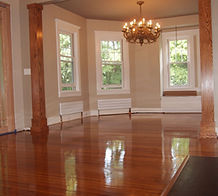
1. Assess the Floor
We evaluate visible damage, finish wear, loose boards, gaps, and signs of moisture. This initial assessment helps identify the likely repair needs and determine whether the floor is a candidate for restoration.
2. Repair or Replace Boards
Where boards are damaged beyond practical repair, selective board replacement or patching may be appropriate. Replacement material is chosen to complement the existing floor as closely as possible, considering species, dimensions, and grain.
3. Sand and Blend
When the floor's condition allows, sanding can remove worn finish and improve surface consistency. Careful preparation helps blend repaired areas with surrounding boards, although differences in age, grain, and stain absorption can affect the final match.
4. Apply the Finish
A suitable finish helps protect the restored surface and brings the wood's appearance together. Finish selection depends on the floor's condition and the look you want. We'll help you understand the available options for your project.
Hardwood Floor Restoration Cost: What to Expect
Hardwood floor restoration cost depends on the work your floor actually needs. A small repair involving a few boards may require a different level of labor and materials than restoring an entire room with water damage, deep stains, or extensive finish wear. An on-site assessment helps establish a more accurate scope.
Key factors include:
-
Extent of damage: Localized scratches and isolated stains may be simpler to address than widespread warping, severe discoloration, or structural concerns.
-
Area size: The square footage affects the amount of labor, preparation, materials, and finishing required.
-
Board replacement and species matching: Finding compatible wood for older or uncommon flooring can add complexity.
-
Sanding and finishing needs: Some floors need selective repairs; others require broader sanding and a new protective finish.
-
Subfloor or moisture issues: Additional investigation or corrective work may be necessary if damage extends beneath the visible boards.
If you're comparing repair with full replacement, ask which sections can reasonably be preserved and which require new material. For a clear picture of your options and the likely cost, request a free estimate. We won't list a generic price range because the right recommendation depends on your floor's actual condition and repair requirements.
Why Choose Us for Hardwood Floor Repair
Restoring wood floors takes more than covering up visible damage. You need a team that considers the condition of the wood, the cause of the problem, and the result you want to achieve.

Family-Run and Local
Based in Poulsbo, our family-run team brings more than 15 years of flooring experience to homes across Kitsap County, with a focus on practical advice and personalized service.
Clear, Practical Recommendations
We explain the difference between targeted repairs and broader restoration, helping you compare hardwood floor refinishing, sanding, and other options before deciding how to proceed.
Careful Craftsmanship
From localized board repairs to surface preparation, our goal is to create a cohesive result that respects the existing floor and addresses the areas that need attention.
Solutions for Your Home
We consider the floor's condition, appearance, and intended use when discussing repair options. If replacement is more appropriate, we can also discuss hardwood floor installation.
About Kitsap Wood Flooring
Kitsap Wood Flooring is a family-run hardwood flooring company founded by Jason and Melia Dandurand and based in Poulsbo. With more than 15 years of experience, the team believes homeowners should understand their options before committing to a project. That means looking at what can be repaired, what may need replacing, and how best to preserve the floor's character. Learn more about our family-run hardwood flooring company.

Hardwood Floor Repair Service Areas in Kitsap County
Kitsap Wood Flooring serves homeowners throughout Kitsap County, WA, from our base in Poulsbo. We provide flooring guidance for homes with everyday wear, localized damage, and older floors that may benefit from restoration. Whether you need floor restoration in Poulsbo, wood floor repair in Bremerton, hardwood floor restoration in Port Townsend, or repair in Silverdale, we can help you explore the next steps for your floor.
Bainbridge Island
Explore our dedicated service for hardwood floor refinishing on Bainbridge Island for information about restoring worn floors and evaluating existing hardwood.
Bremerton
Learn about hardwood floor refinishing in Bremerton, including options for refreshing existing wood floors.
We also serve Silverdale, Port Orchard, Kingston, Suquamish, Keyport, Hansville, Indianola, Seabeck, Manchester, Port Ludlow, and Port Townsend, alongside Poulsbo and other nearby communities.
Not sure we cover your area? Call 360-930-1118.
Hardwood Floor Repair & Restoration FAQs
Bring Your Hardwood Floors Back to Life!
Don't let damaged, worn, or aging hardwood keep your home from looking its best. Let Kitsap Wood Flooring help you explore practical repair and restoration options tailored to your floors.
Preserve your floor's character and take the first step toward a beautiful finish today!